Gospelimages (Imazhe Ungjilli) është i përkushtuar për përhapjen e mesazhit Biblik sa më gjërësisht që të jetë e mundur përmes pikturave, por jo për arsye përfitimi. Përmes dyqanit të web-it është e mundur të blihen riprodhime të cilësisë së lartë në kanavacë të pikturës së zgjedhur. Të gjitha të ardhurat nga të drejtat do të jenë të disponueshme tek GlobalRize, “duke tejshkuar botën për Krishtin online”. www.globalrize.org Ju po largoheni nga website-i.
Kthehu te indeksi
Shkarkoe imazhin falas
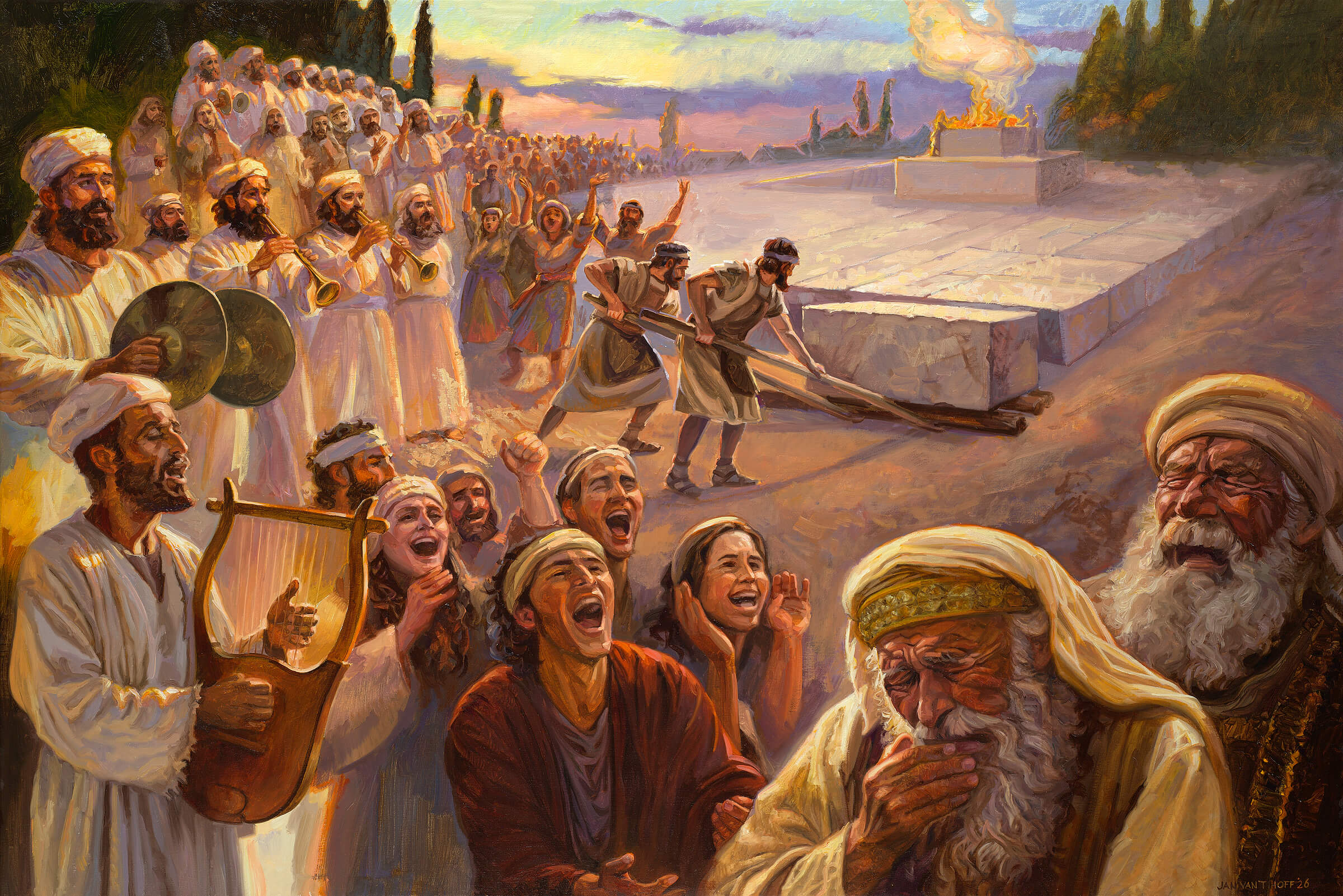
Rebuilding the Temple after the exile.
Ezdra 3:11-12
11 ‘And all the people shouted with a great shout when they praised the Lord, because the foundation of the house of the Lord was laid. 12 But many of the priests and Levites and heads of fathers' houses, old men who had seen the first house, wept with a loud voice when they saw the foundation of this house being laid, though many shouted aloud for joy',Teksti i plotë i biblës
8 ‘Now in the second year after their coming to the house of God at Jerusalem, in the
second month, Zerubbabel the son of Shealtiel and Jeshua the son of Jozadak made a
beginning, together with the rest of their kinsmen, the priests and the Levites and all who
had come to Jerusalem from the captivity. They appointed the Levites, from twenty years
old and upward, to supervise the work of the house of the Lord. 9 And Jeshua with his
sons and his brothers, and Kadmiel and his sons, the sons of Judah, together supervised
the workmen in the house of God, along with the sons of Henadad and the Levites, their
sons and brothers.10 And when the builders laid the foundation of the temple of the Lord,
the priests in their vestments came forward with trumpets, and the Levites, the sons of
Asaph, with cymbals, to praise the Lord, according to the directions of David king of
Israel. 11 And they sang responsively, praising and giving thanks to the Lord,“For he is
good,
for his steadfast love endures forever toward Israel.”And all the people shouted with a
great shout when they praised the Lord, because the foundation of the house of
the Lord was laid. 12 But many of the priests and Levites and heads of fathers' houses, old
men who had seen the first house, wept with a loud voice when they saw the foundation of
this house being laid, though many shouted aloud for joy, 13 so that the people could not
distinguish the sound of the joyful shout from the sound of the people's weeping, for the
people shouted with a great shout, and the sound was heard far away.’
After 70 years of exile in Babylon, Cyrus, the king of Persia, allows the Jewish exiles to
return to Jerusalem in his first year of reign. The LORD put this in his heart, so that the
prophecy of Jeremiah 29 might be fulfilled:
10 ‘For thus says the LORD: Surely, only when seventy years in Babylon have passed will
I look upon you and fulfill My good word concerning you, by bringing you back to this
place.
11 For I know the thoughts that I have for you, says the LORD. They are thoughts of
peace and not of evil, namely to give you a future and a hope’.
Mbi pikturën
After 70 years of exile in Babylon, Cyrus, the king of Persia, allows the Jewish exiles to
return to Jerusalem in his first year of reign. The LORD put this in his heart, so that the
prophecy of Jeremiah 29 might be fulfilled:
10 ‘For thus says the LORD: Surely, only when seventy years in Babylon have passed will
I look upon you and fulfill My good word concerning you, by bringing you back to this
place.
11 For I know the thoughts that I have for you, says the LORD. They are thoughts of
peace and not of evil, namely to give you a future and a hope’.
Zerubbabel, the governor of the Persian province of Judah, is a descendant of King David.
The covenant that the LORD made with David included the following promise:
‘Your house and your kingdom shall be established before your eyes forever, your throne
shall be secure forever’ 2 Samuel 7 verse 16.
Under the leadership of governor Zerubbabel and the High Priest Joshua (or Jeshua), the
altar of burnt offering is restored first after the return, so that worship can be resumed.
Afterward, work begins on restoring the foundation of the temple destroyed by
Nebuchadnezzar in 586 BC.
Jeremiah had prophesied long before; in 588-587 BC:
33 verse 10 ‘Thus says the LORD: In this place, of which you say: It lies desolate, so that
there is no man and no beast left—in the cities of Judah and on the streets of Jerusalem,
which are so desolate that no man, no inhabitant, and no beast is to be found there
anymore, shall again be heard
11 the voice of joy, the voice of gladness, the voice of the bridegroom and the voice of the
bride, the voice of those who say: Praise the LORD of hosts, for the LORD is good, for His
mercy endures forever, and the voice of those who bring a thank offering in the house of
the LORD. For I will bring about a reversal in the captivity of the land, so that it will be as it
was before, says the LORD’
Now, in 536 BC, the foundation of the temple is restored amidst festive singing by priests
and Levites. The young generation of the returnees is full of joy, but the elder people, who
still saw Solomon's temple (about 60 years earlier), weep, because they realize that this
second temple will never be able to equal the first; the Ark of the Covenant is no more.
Yet the prophet Haggai writes in 520 BC:
2 verse 10 ‘The glory of this future house will be greater than that of the first, says the
LORD of hosts. In this place I will give peace, says the LORD of hosts’.
How then? Hundreds of years later, Jesus, the Son of David, will come to this temple. The
temple is no more than a temporary example, which has come to fulfillment in Jesus.
John 1:14: ‘And the Word became flesh and dwelt among us (‘tabernacled’), and we
beheld His glory, the glory as of the Only Begotten of the Father, full of grace and truth’.
John 2:19: 'Jesus answered and said to them: Destroy this temple, and in three days I will
raise it up’.
He was speaking about the temple of His body.
To receive forgiveness, the Jews had to offer sacrifices in the stone temple. Jesus had
already taken over this function during his lifetime by forgiving sins outside the temple on
his own authority. Through his crucifixion (the destruction of the temple) and his
resurrection (the rising again after three days), He became the ultimate and definitive
sacrifice, rendering the stone building superfluous.
1 Peter 2:4: 'and come to Him as to a living stone, rejected indeed by men, yet chosen by
God and precious,
5 then you also, as living stones, are being built up into a spiritual house, into a holy
priesthood, to offer spiritual sacrifices acceptable to God through Jesus Christ.
6 Therefore it says in Scripture: Behold, I lay in Zion a cornerstone chosen and precious;
and: Whoever believes in Him shall not be ashamed.
7 To you then, who believe, He is precious; but to the disobedient it applies: The stone
which the builders rejected has become the cornerstone, and a stone of offense and a
stumbling block;